Developed by Pampart Design Software and IT, AgroFlux brings together software engineering, IoT integration, geospatial thinking, traceability, logistics visibility, and user-centered platform design in one modular initiative. The structure follows the logic of a European research project site: clear purpose, measurable relevance, practical deployment, and room for growth.
Overview
AgroFlux is a digital agriculture initiative developed by Pampart Design Software and IT, a technology studio focused on building practical, scalable digital platforms for real-world industries. The project combines experience in software engineering, geospatial thinking, IoT integration, and user-centric design to create a unified ecosystem that supports farmers, agronomists, cooperatives, logistics partners, and buyers.
The vision behind AgroFlux is rooted in the belief that agricultural innovation must be accessible, measurable, and economically viable for small and medium producers. Rather than focusing solely on experimental technologies, AgroFlux emphasizes applied digital transformation that can be realistically adopted in everyday farming operations.
The platform addresses long-standing challenges in agricultural production such as fragmented data, lack of traceability, inefficient communication between stakeholders, and limited access to decision-support tools. By integrating modern web technologies, sensor-driven monitoring, and modular software architecture, AgroFlux aims to bridge the gap between advanced agricultural innovation and practical field-level implementation.
Pampart Design contributes its multidisciplinary capabilities in software development, UX engineering, system architecture, and digital product strategy, enabling AgroFlux to evolve as a flexible and continuously improving agritech infrastructure.
Solution & Product
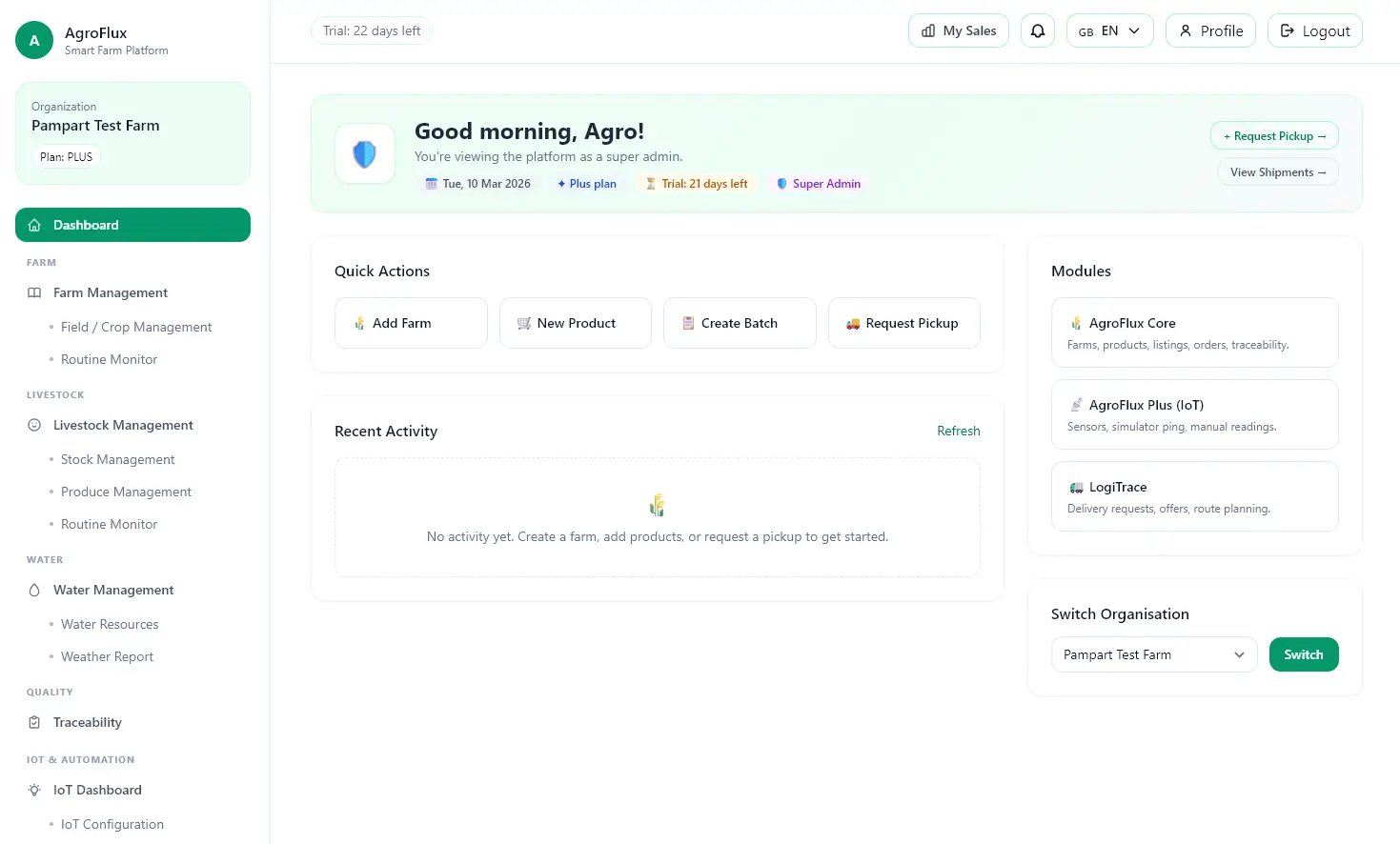
AgroFlux is being developed as a modular digital platform that enables farmers and agricultural organizations to manage production processes, monitor environmental conditions, improve logistics coordination, and enhance market transparency.
A structured digital environment for field data, operational activity tracking, and crop lifecycle visibility.
Environmental and irrigation-related data such as humidity, temperature, and soil conditions can feed more informed decisions.
Products can be followed from cultivation to distribution, improving transparency, trust, and downstream visibility.
Producers can present available or upcoming harvests while creating more direct buyer relationships.
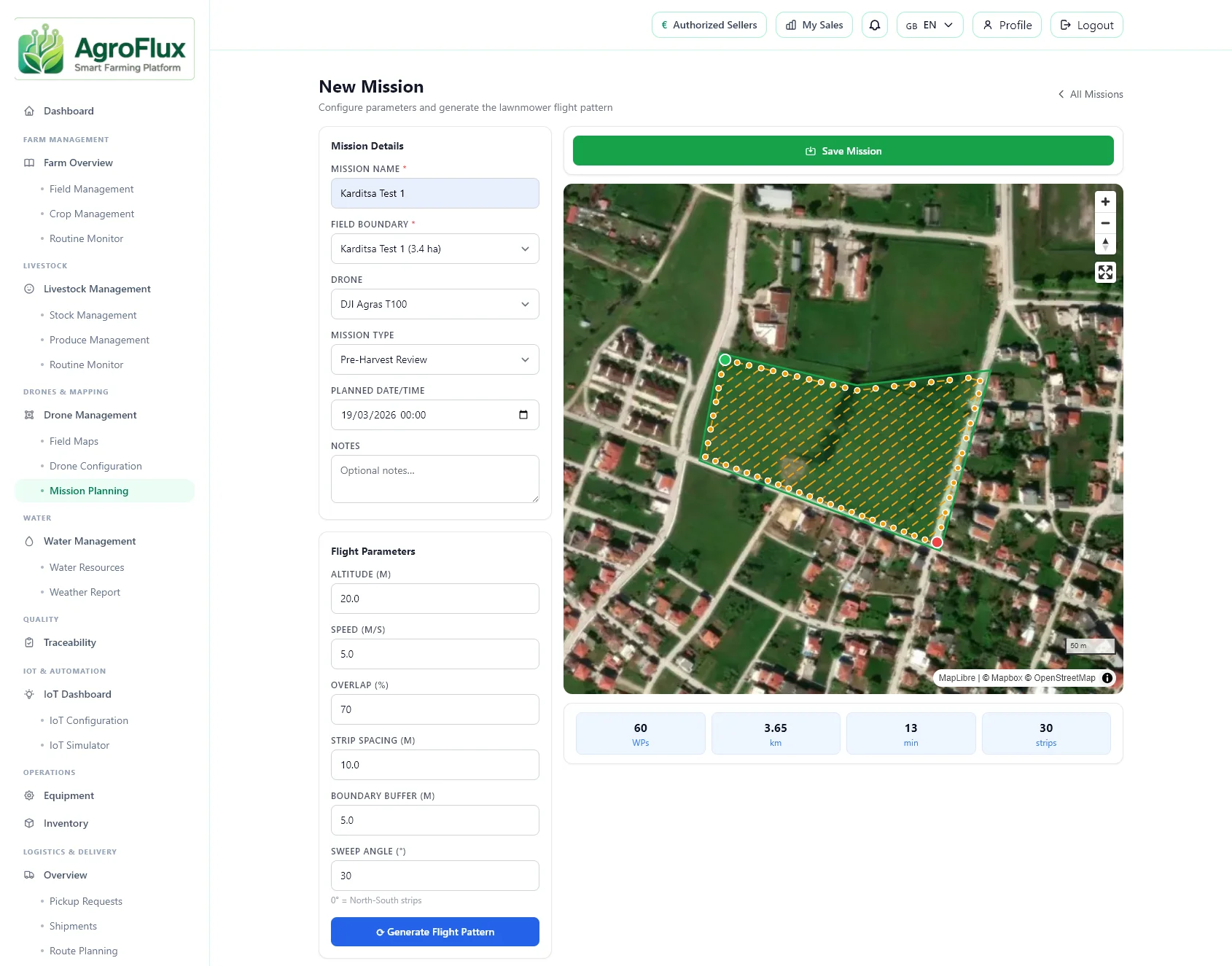
Modules under development are intended to support crop observation, field mapping, and mission planning workflows.
A future coordination module designed to improve visibility of transport and delivery processes within agricultural networks.
The platform is designed using modern web technologies and scalable backend architecture to allow progressive expansion into new services, integrations, geographic markets, multilingual environments, and multi-tenant operational use.
AgroFlux approaches agricultural digitalization as a connected operational system rather than a collection of isolated tools. By combining field records, sensor inputs, geospatial context and future drone-assisted workflows, the platform helps transform agricultural activity into structured, usable intelligence.
This integrated model supports more precise monitoring, stronger traceability and better planning across different farm types and production scales. The long-term goal is to create a scalable digital infrastructure that supports farmers, advisors, cooperatives and supply-chain stakeholders in a shared ecosystem.
Traction & Achievements
AgroFlux is currently in active development and pilot preparation stages, with ongoing efforts focused on establishing initial test deployments for environmental monitoring and digital farm management workflows.
Early concept validation has included platform prototyping, user-interface development, and technical planning for IoT connectivity and data visualization modules.
The project has initiated exploratory collaborations and discussions with stakeholders in the agricultural technology landscape, aiming to align its development roadmap with real production needs.
Pampart Design’s experience in delivering custom software platforms and digital service infrastructures contributes to AgroFlux’s credibility as a technically feasible and implementation-oriented initiative.
Future milestones include pilot field deployments, integration of sensor networks, marketplace onboarding of producers, and the progressive introduction of drone-assisted monitoring capabilities.
Team & Why Us
AgroFlux is driven by a compact but multidisciplinary team combining expertise in software engineering, digital product design, and applied problem-solving across different industries. Pampart Design provides the technological backbone of the initiative, bringing experience in building scalable web applications, cloud-based systems, and integrated digital services.
The team’s strength lies in its pragmatic approach to innovation: prioritizing usability, cost-efficiency, and incremental deployment rather than purely theoretical solutions. This mindset enables AgroFlux to address real operational challenges faced by farmers and agricultural businesses.
By maintaining close interaction with potential users and industry partners, the project aims to ensure that technological development remains aligned with field realities. This approach increases the likelihood of adoption and long-term sustainability.
Funding Needs
The development of integrated agricultural technology platforms requires sustained investment in research, engineering, infrastructure deployment, and pilot implementation activities. Key funding priorities for AgroFlux include sensor network testing, platform feature expansion, data analytics development, and market onboarding initiatives.
As precision agriculture and digital supply-chain transparency become increasingly important across Europe, early investment can accelerate AgroFlux’s transition from pilot stage to scalable commercial deployment. Funding support would contribute to strengthening technological capabilities, expanding partnerships, and positioning the platform as a competitive regional agritech solution.